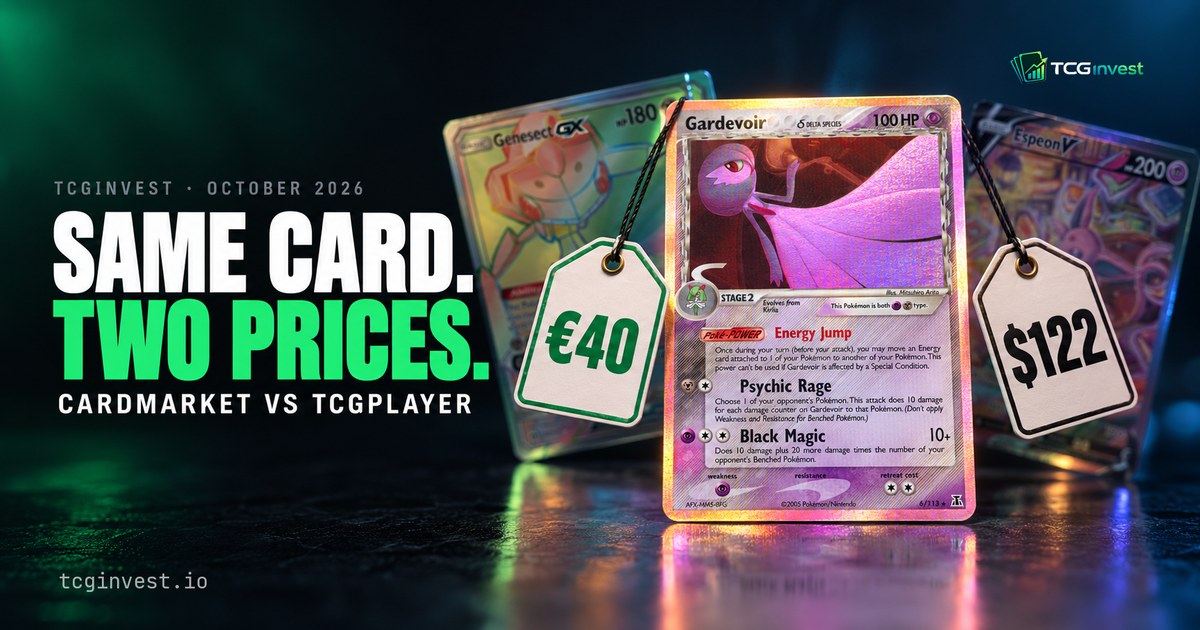
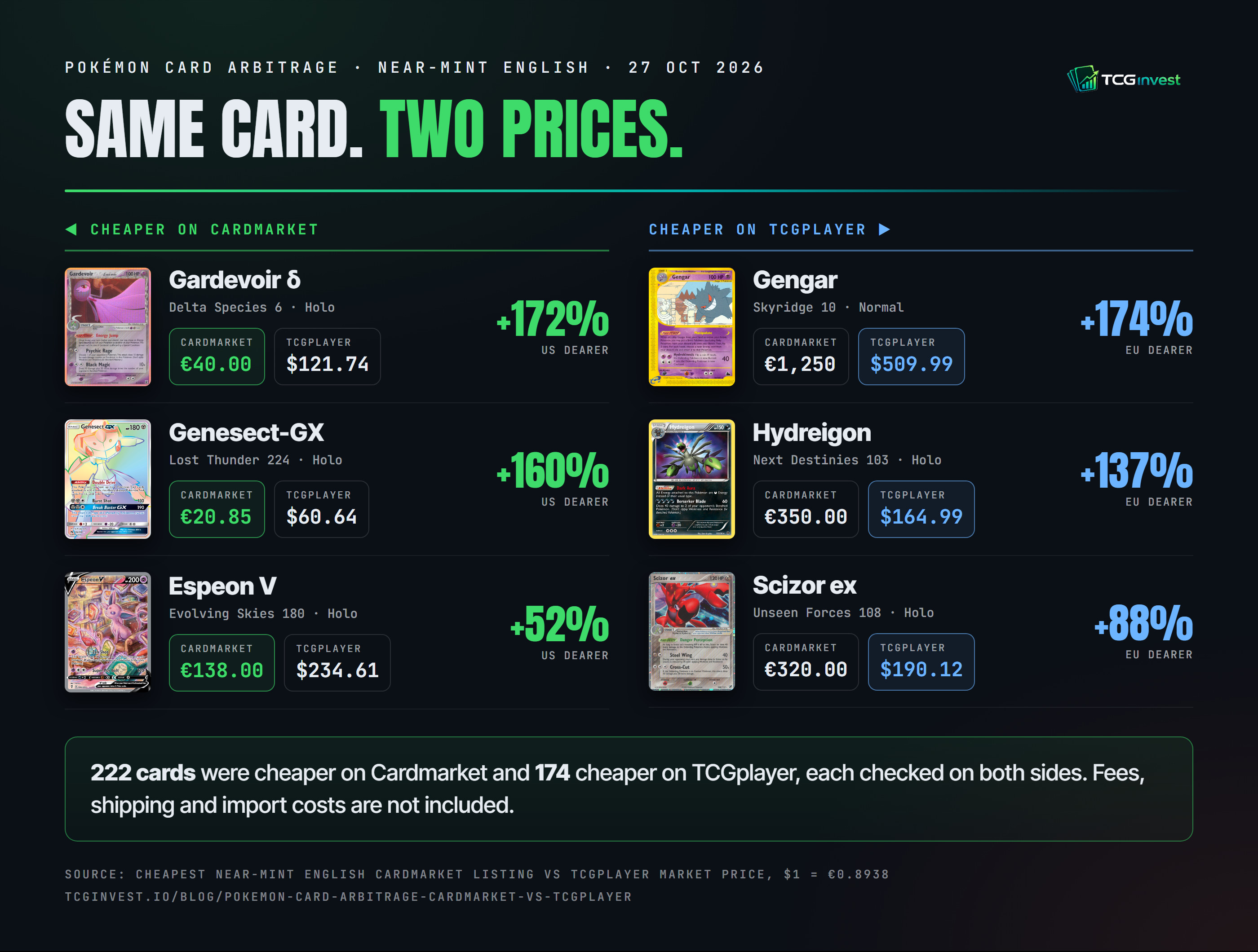
The gaps are real, on hundreds of cards, in both directions. On 27 October 2026, 222 near-mint English cards were cheaper on Cardmarket than TCGplayer's market price, and 174 were cheaper on TCGplayer. The widest: Gardevoir δ from Delta Species, €40.00 on Cardmarket, $121.74 on TCGplayer.
But the typical gap is smaller than you have been told. Compared like for like, near-mint English on both sides, Europe is cheaper on 61% of cards by a median of 6.7%, not the 20 to 30% most comparisons show. The difference comes from one number: Cardmarket's averages count every language and condition.
So the list matters more than the average. We publish every card where the gap is wide, checked on both sides: Cross-market arbitrage leaderboard.
- Cards cheaper on Cardmarket than TCGplayer, checked both sides: 222. Cheaper on TCGplayer: 174.
- Like for like across 795 cards: Europe cheaper on 61%, median gap 6.7%.
- Same 795 cards using Cardmarket's 30-day average instead: median gap 19.8%.
- Cheapest near-mint English Cardmarket listing versus Cardmarket's own 30-day average: median 23% above.
- Cards printed 1999 to 2011: cheaper in the US on 54% to 58%. Cards printed 2012 onwards: cheaper in Europe on about 66%.
- Seller fees: Cardmarket 5%. TCGplayer 10.75% + 2.5% + $0.30.
Source: TCGinvest (tcginvest.io). TCGplayer market prices of 26 October 2026; Cardmarket listings read by TCGinvest in the previous 30 days; $1 = €0.8938.
What Pokémon card arbitrage between Cardmarket and TCGplayer is
Cardmarket is Europe's main card marketplace and TCGplayer is America's. They price the same cards separately, in different currencies, with different sellers, fees and buyers. When the same card, in the same condition and language, costs clearly less on one than the other, that difference is a cross-market price gap. Buying on the cheap side and selling on the dear side is what collectors call arbitrage.
The hard part has never been the idea. It is knowing which gaps are real. A gap built on a mismatched printing, a Japanese copy, a played card or one stale listing disappears the moment you try to act on it. That is what this article and our list are about.
Cardmarket vs TCGplayer: what each price actually means
| TCGplayer | Cardmarket | |
|---|---|---|
| Where | United States | Europe |
| Currency | US dollars | Euros |
| Headline price | Market price | Price trend, plus 1, 7 and 30-day averages |
| Built from | Recent sales on TCGplayer | Sales on Cardmarket for the whole product |
| Language and condition | The listed printing in near mint | All languages and conditions mixed together |
| Cheapest offer | Listings on the product page | "From" price, filterable by language and condition |
| Condition scale | Near Mint, Lightly Played, Moderately Played, Heavily Played, Damaged | Mint, Near Mint, Excellent, Good, Light Played, Played, Poor |
| Seller fee | 10.75% commission (max $75 per product) + 2.5% + $0.30 per order | 5% commission |
The row that decides everything is the fifth one. TCGplayer's market price follows near-mint sales of the printing you are looking at. Cardmarket's trend and averages are calculated across every copy of that card sold on the site, so a German copy, a French copy and a lightly played copy all count. Those copies sell for less, and they pull the average down.
For the general picture of why every price site shows a different number, see why Pokémon price sites disagree. Here we only need the consequence for Cardmarket against TCGplayer.
Why most Cardmarket vs TCGplayer comparisons overstate the gap
We took 795 cards with a TCGplayer market price, a fresh Cardmarket reading and at least 8 recent US sales, and compared them two ways.
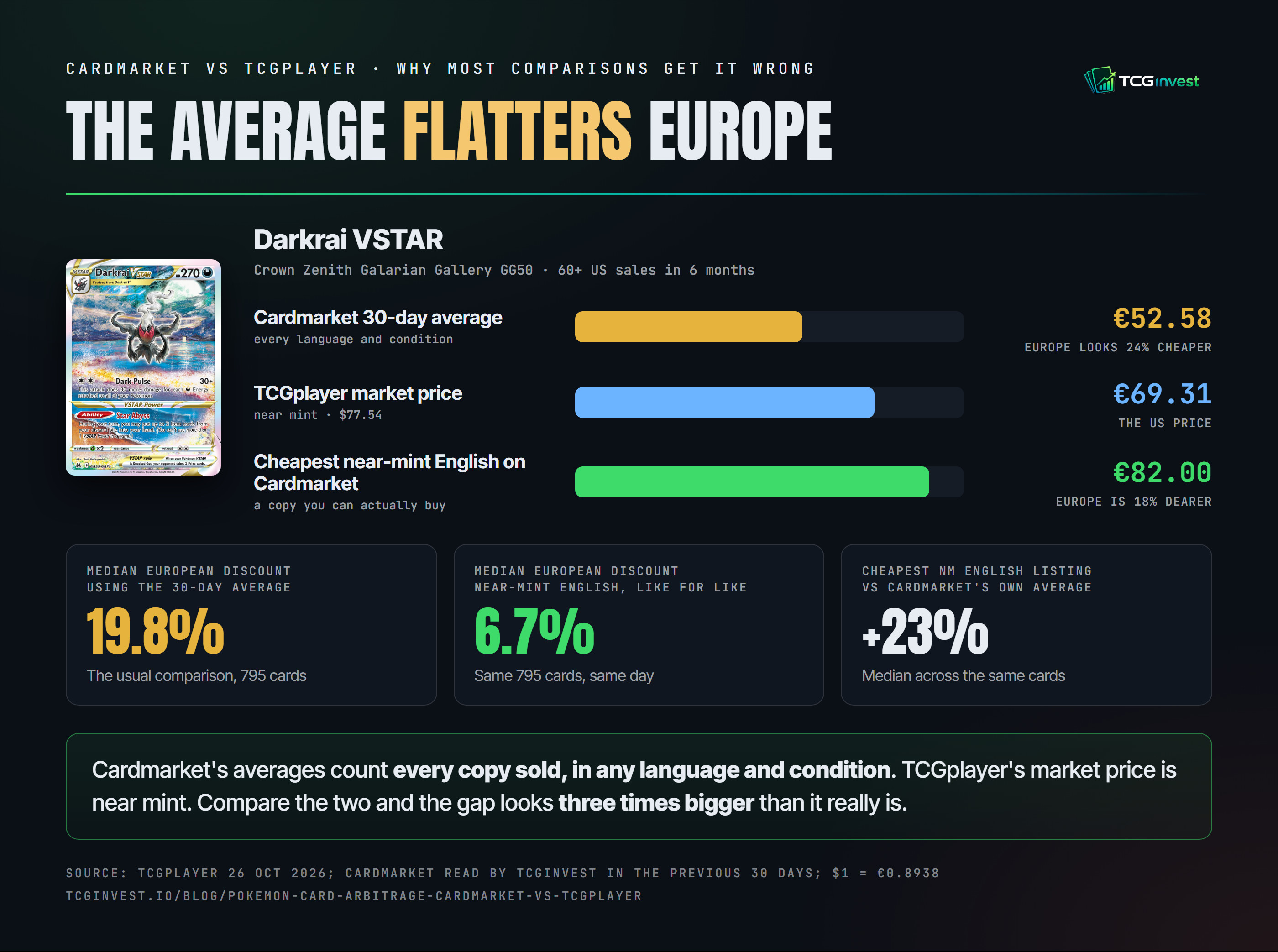
- The usual way: Cardmarket's 30-day average against TCGplayer's market price. Median European discount: 19.8%.
- Like for like: the cheapest near-mint English Cardmarket listing against TCGplayer's market price. Median European discount: 6.7%.
Same cards, same day, a threefold difference. On the same 795 cards, the cheapest near-mint English listing sat a median 23% above Cardmarket's own 30-day average. That 23% is the language and condition mix, and it is exactly the amount by which the usual comparison flatters Europe.
One card shows it clearly. Darkrai VSTAR from Crown Zenith's Galarian Gallery has a Cardmarket 30-day average of €52.58, which makes it look 24% cheaper than its TCGplayer market price of $77.54 (€69.31). The cheapest near-mint English copy on Cardmarket costs €82.00. Like for like, Europe is 18% dearer.
We made this mistake ourselves. In June we published Is Europe really cheaper for Pokémon cards? using Cardmarket's 30-day average and reported a 28% median gap. Measured like for like, the typical gap is in single digits. We have added a correction to that article. The finding that survives is the one that matters for arbitrage: the average gap is small, but on a few hundred specific cards it is very large.
Some paid tools build their spreads from Cardmarket's trend price for the same reason: it is the number that is easy to get. It is also the number that mixes languages and conditions.
Which side is cheaper depends on when the card was printed
| Printed | Cards | Median gap, like for like | Cheaper in the US |
|---|---|---|---|
| 1999 to 2003 (WotC, e-Card) | 83 | US cheaper by 5.0% | 54% |
| 2004 to 2011 (EX, DP, HGSS) | 94 | US cheaper by 5.4% | 58% |
| 2012 to 2019 (BW, XY, Sun & Moon) | 236 | Europe cheaper by 10.9% | 33% |
| 2020 to 2026 (SwSh, SV, Mega) | 382 | Europe cheaper by 9.0% | 34% |
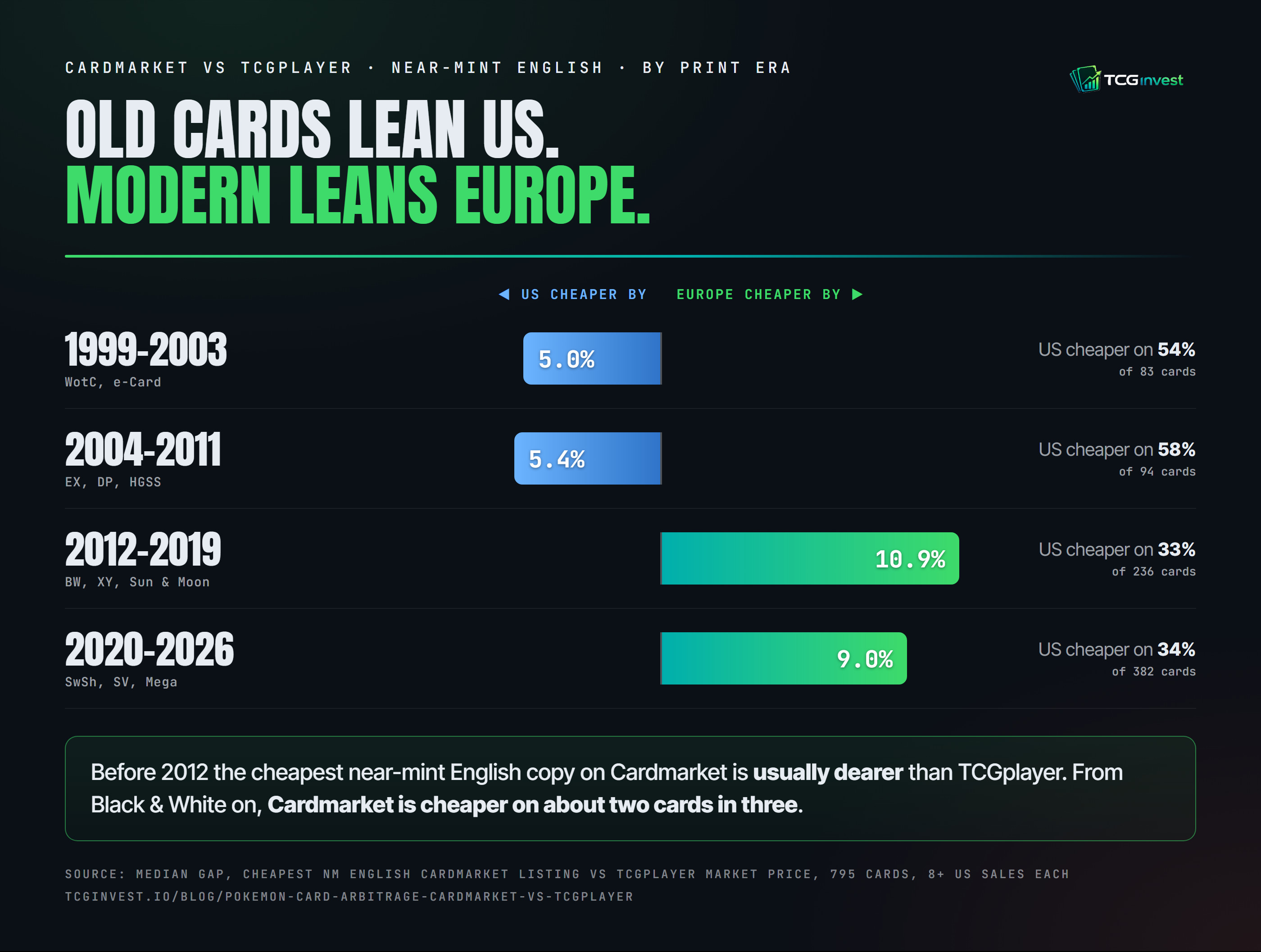
The split is consistent with where near-mint English supply sits. Old English cards in true near mint are scarce in Europe, where much of the early product was printed in other languages, so the cheapest English copy on Cardmarket is often an expensive one. Modern English product is sold in volume across Europe, and Cardmarket's lower fees and deep seller base keep its listings competitive.
By price, the like-for-like gap is widest on mid-priced cards: Europe cheaper by a median 10.6% on $25 to $75 cards, against 7.0% under $25 and roughly level above $200.
The cards with the widest gaps right now
These are the top of the free view of our list on 27 October 2026. Europe is the cheapest near-mint English Cardmarket listing from a seller with 50+ sales; US is TCGplayer's market price. Tap a card for its full price history on both sides.
Cheaper on Cardmarket
| Card | Cardmarket | TCGplayer | US costs more by |
|---|---|---|---|
| Gardevoir δ Delta Species 6 · Holo | €40.00 | $121.74 | 172% |
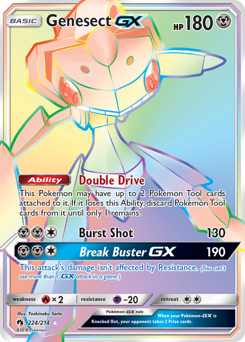
| Genesect-GX Lost Thunder 224 · Holo | €20.85 | $60.64 | 160% |
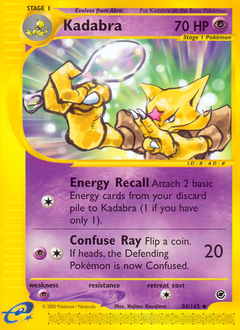
| Kadabra Expedition 84 · Reverse holo | €29.99 | $80.00 | 138% |
| Scyther Aquapolis 57 · Normal | €13.97 | $36.15 | 131% |
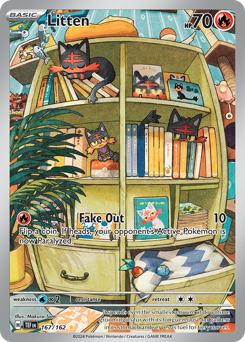
| Litten Temporal Forces 167 · Holo | €14.99 | $37.70 | 125% |
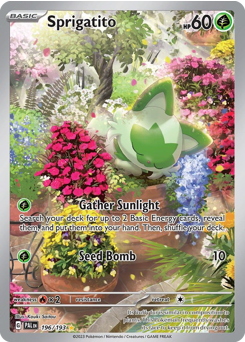
| Sprigatito Paldea Evolved 196 · Holo | €22.00 | $53.59 | 118% |
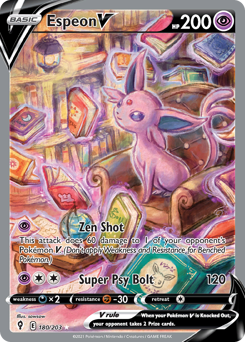
| Espeon V Evolving Skies 180 · Holo | €138.00 | $234.61 | 52% |
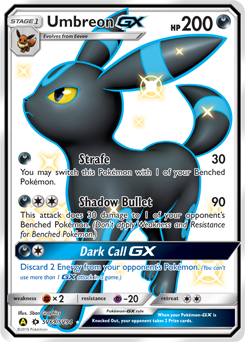
| Umbreon-GX Hidden Fates Shiny Vault SV69 · Holo | €194.99 | $314.26 | 44% |


Cheaper on TCGplayer
| Card | Cardmarket | TCGplayer | Europe costs more by |
|---|---|---|---|
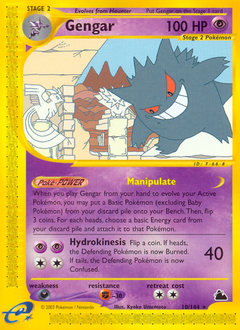
| Gengar Skyridge 10 · Normal | €1,250.00 | $509.99 | 174% |
| Raichu Base Set 14 · Unlimited holo | €150.00 | $62.51 | 168% |
| Hydreigon Next Destinies 103 · Holo | €350.00 | $164.99 | 137% |
| Rocket's Entei ex Team Rocket Returns 97 · Holo | €1,000.00 | $476.97 | 135% |
| Mewtwo Legendary Collection 29 · Normal | €129.99 | $63.94 | 128% |
| Scizor ex Unseen Forces 108 · Holo | €320.00 | $190.12 | 88% |
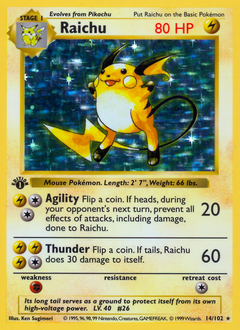


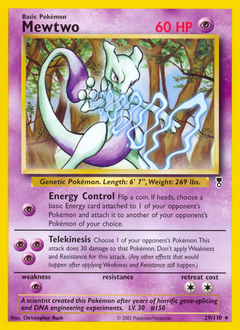

Read the two tables differently. On the Cardmarket side, the price is a listing you can buy today, and TCGplayer's market price is what the card has recently sold for: both ends are observed. On the TCGplayer side, the Cardmarket figure is the cheapest near-mint English copy on offer, which on thinly listed vintage cards can sit well above what the card would actually sell for in Europe. A wide gap on an old card with one or two English listings says as much about supply as about price.
Every card where near-mint English prices differ between Cardmarket and TCGplayer, sorted by the biggest gap, filterable by budget from under €50 to €1,000+. Updated hourly from our daily price reads. The top 20 of every view are free, no account needed. Open the Cross-market arbitrage leaderboard.
How we make sure a gap is real
A card only appears on the list when every one of these checks passes:
- Europe is a real listing, not an average. The cheapest near-mint English copy on Cardmarket, read by us in the last 7 days, from a seller with at least 50 sales.
- The US price is steady. TCGplayer's market price today, within 15% of its own 14-day median, so one odd sale cannot create a gap. At least $20.
- A third source agrees. The TCGplayer price must sit within 0.67 to 1.6 times PriceCharting's figure for ungraded copies sold on eBay.
- Same card, same printing. Holo against holo, reverse against reverse. Promos, staff, league, prerelease and jumbo cards are left out because their versions are hard to match.
- No impossible gaps. Anything beyond 3x in either direction is treated as a probable mismatch and dropped.
Each check removes cards. That is the point: a shorter list of gaps you can trust beats a long list built on averages.
What the gap has to cover
A price gap is not a margin. Three things come out of it.
Marketplace fees. Cardmarket charges sellers a 5% commission on the item price. TCGplayer charges standard marketplace sellers 10.75% commission, capped at $75 per product, plus a 2.5% + $0.30 transaction fee on the whole order including shipping. Take Gardevoir δ: selling at $121.74 on TCGplayer costs about $16.40 in fees, leaving about $105.30, or €94 at today's rate, against €40.00 to buy it on Cardmarket. Before shipping and import costs, that gap survives easily. On a card with a 15% gap, TCGplayer's fees alone take most of it.
Shipping. Tracked international shipping is a fixed cost per order, so it weighs most on cheap cards. That is one reason the list only includes cards at $20 or more on the US side.
Import charges. The US suspended its $800 duty-free de minimis exemption for imports from every country on 29 August 2025, so cards shipped into the US can carry duty and carrier processing fees. Goods shipped into the EU pay import VAT from the first euro. Check the rules for your country before you rely on a gap.
If the gaps are this big, why do they not close?
A card at €40 in Europe and $121.74 in the US looks like free money. Five things explain why gaps like that stay open.
- It is one copy, not a supply. The European price is the single cheapest near-mint English listing. Buy it and the next copy costs more. Most of the widest gaps in the free view are on cards under €50, one listing each.
- Buying is instant, selling is not. TCGplayer's market price is what recent buyers paid. To get it you list the card and wait, alongside every other seller of that card.
- The costs are per card. Take Genesect-GX: €20.85 on Cardmarket, $60.64 on TCGplayer. TCGplayer's fees take about $8.35, leaving about €46.75, so the gap is about €26 before two tracked shipments and any import duty. On cheaper cards the fixed costs take most of it.
- Near mint is not the same standard. Cardmarket and TCGplayer grade condition on different scales. A card sold as near mint in Europe can be judged lightly played in the US, and the buyer can return it.
- Selling abroad takes set-up. Selling on the other continent's marketplace means an account, payouts and returns there. Check each marketplace's seller requirements for your country.
None of this makes the gaps fake. It makes them small, per card and manual, which is exactly why they persist, and why a list that is checked every day is useful.
Cardmarket vs TCGplayer: which to use
- Valuing a European collection: Cardmarket, using near-mint English listings or the price of your card's actual language. Not the trend, which mixes them.
- Valuing a US collection: TCGplayer's market price on modern cards that sell often. On thinly traded vintage cards, check what copies actually sold for; our app accuracy test found the market price 46% to 437% above real sales on seven older cards.
- Comparing the two: near-mint English on both sides, or not at all. Any comparison that uses Cardmarket's trend or averages against TCGplayer's market price will show Europe cheaper than it really is.
- Finding the cards where the gap is wide: our Cross-market arbitrage leaderboard, both directions, checked daily.
How we ran the numbers
- Price gaps list. Read on 27 October 2026 from TCGinvest's Cross-market arbitrage leaderboard. Exchange rate $1 = €0.8938.
- Like-for-like comparison. 795 English card versions with a TCGplayer market price on 26 October 2026, a cheapest near-mint English Cardmarket listing read in the previous 30 days, and at least 8 ungraded eBay sales in 180 days recorded by PriceCharting. TCGplayer prices from $8 to $3,000; 1st editions excluded; ratios beyond 3x dropped as probable mismatches.
- Robustness. Using only Cardmarket listings read in the last 7 days (265 cards) the median European discount was 4.5%; using only cards with 60 or more recent US sales (528) it was 9.9%.
- Definitions. TCGplayer's market price is described by TCGplayer as based on recent sales. Cardmarket's trend and 1, 7 and 30-day averages are calculated per product; they are not split by language or condition.
- Fees. TCGplayer's published marketplace fees for Level 1 to 4 sellers and Cardmarket's published 5% commission, as of October 2026.
Frequently asked
What is Pokémon card arbitrage?
Buying a card where it is cheaper and selling it where it is dearer. Between Europe and the US the gap is real on hundreds of cards: on 27 October 2026 our price gaps list showed 222 near-mint English cards cheaper on Cardmarket than TCGplayer's market price and 174 cheaper on TCGplayer, each checked on both sides. Shipping, marketplace fees and import charges come out of the gap, so the size of the gap decides whether it survives them.
Is Cardmarket cheaper than TCGplayer?
Usually, but by much less than most comparisons say. Like for like, the cheapest near-mint English Cardmarket listing against TCGplayer's market price, Europe was cheaper on 61% of 795 cards with a median gap of 6.7%. On cards printed before 2012 the US was cheaper more often than not. Comparisons that use Cardmarket's 30-day average show about 20% on the same cards, because that average includes every language and condition.
Why do Cardmarket and TCGplayer show different prices for the same card?
They measure different things. TCGplayer's market price is built from recent near-mint sales on TCGplayer. Cardmarket's trend and 30-day average are calculated per product across every copy sold, whatever its language or condition, so cheap German, French and played copies pull them down. The cheapest near-mint English Cardmarket listing sat a median 23% above Cardmarket's own 30-day average on the 795 cards we compared.
Which Cardmarket price should I compare with TCGplayer?
The cheapest near-mint English listing from an established seller, filtered on the card's page. Not the trend price and not the 30-day average, which mix languages and conditions. That is the figure our price gaps list uses, from sellers with at least 50 sales, read in the last 7 days.
What fees do Cardmarket and TCGplayer charge sellers?
Cardmarket charges a 5% commission on the item price. TCGplayer charges standard marketplace sellers a 10.75% commission, capped at $75 per product, plus a 2.5% + $0.30 transaction fee on the order total including shipping. On a $100 card that is about $13.55 on TCGplayer against about $5 on Cardmarket, before shipping.
If the gaps are this big, why doesn't everyone do it?
Because each gap is one copy at one price, and the costs are per card. The European price is the cheapest single near-mint English listing; the next copy costs more. Selling at TCGplayer's market price means listing and waiting. TCGplayer's fees take about 13.5%, and tracked shipping both ways plus any import duty come out of the rest. Condition standards also differ, so a card bought as near mint in Europe can be returned as lightly played in the US. The gaps are real but small, per card and manual, which is why they persist.
Where can I see Cardmarket vs TCGplayer price gaps?
Our Cross-market arbitrage leaderboard lists every card where the near-mint English price differs between Cardmarket and TCGplayer, both directions, filterable by budget. The top 20 of every view are free; Pro shows the full list.
TCGinvest reads prices daily from Cardmarket (EU), TCGplayer and PriceCharting (US). Prices in this article are from 26 and 27 October 2026 and will have moved since; the leaderboard always shows the current figures. Nothing here is financial advice.