
It starts with a leaked sheet
This week a photo of an internal GameStop pre-order sheet started circulating: the full 30th Celebration product line, SKU numbers, a down-payment column, a limit of 2 per customer — and handwritten prices at roughly three times MSRP on every row.
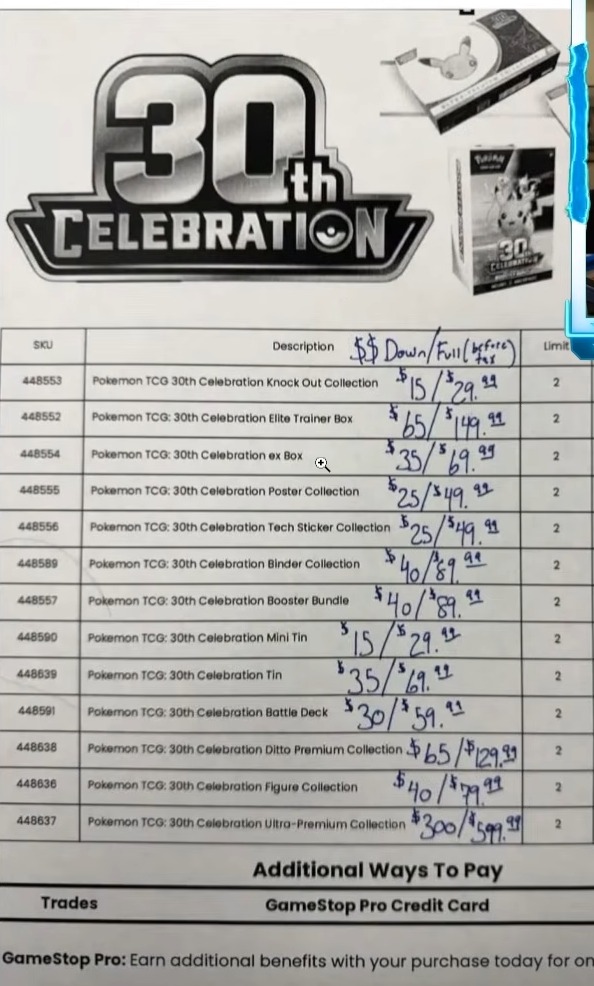
How solid is it? The two headline numbers are independently corroborated: GameStop's $599.99 Ultra-Premium listing was reported separately by multiple Pokémon deal trackers, and Kotaku ran its own story on GameStop's 30th anniversary markups (their early Elite Trainer Box figure was ~$130 against the sheet's $149.99 — either a raise or an early quote). The smaller SKUs rest on the sheet alone, so treat those as reported rather than confirmed. Everything that follows leans on the corroborated anchors.
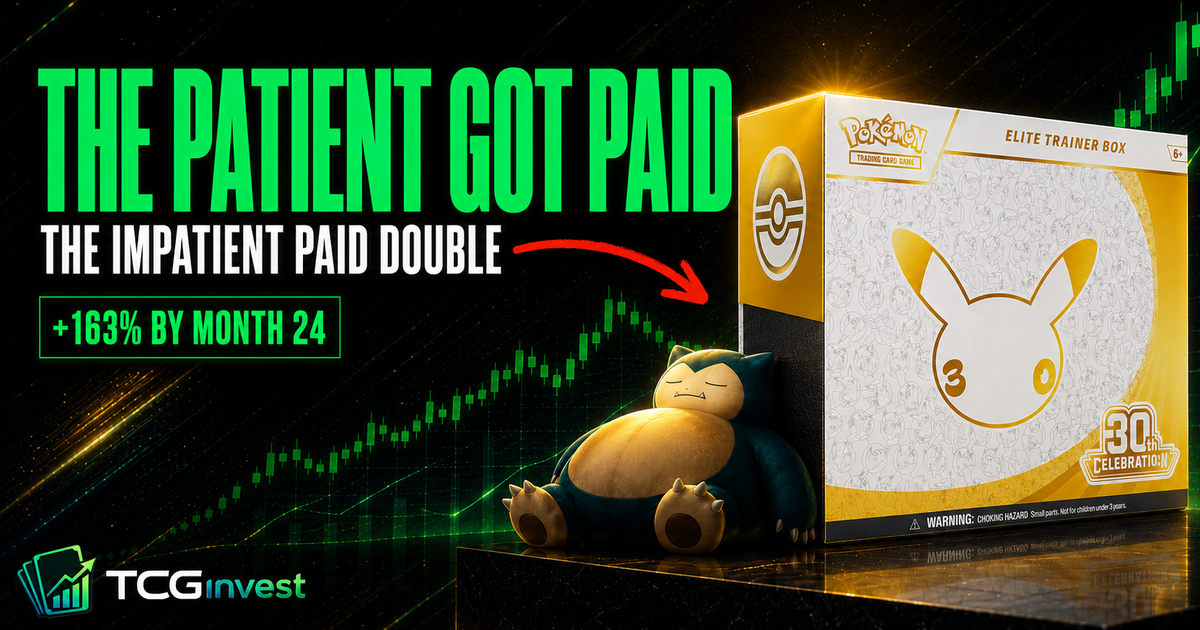
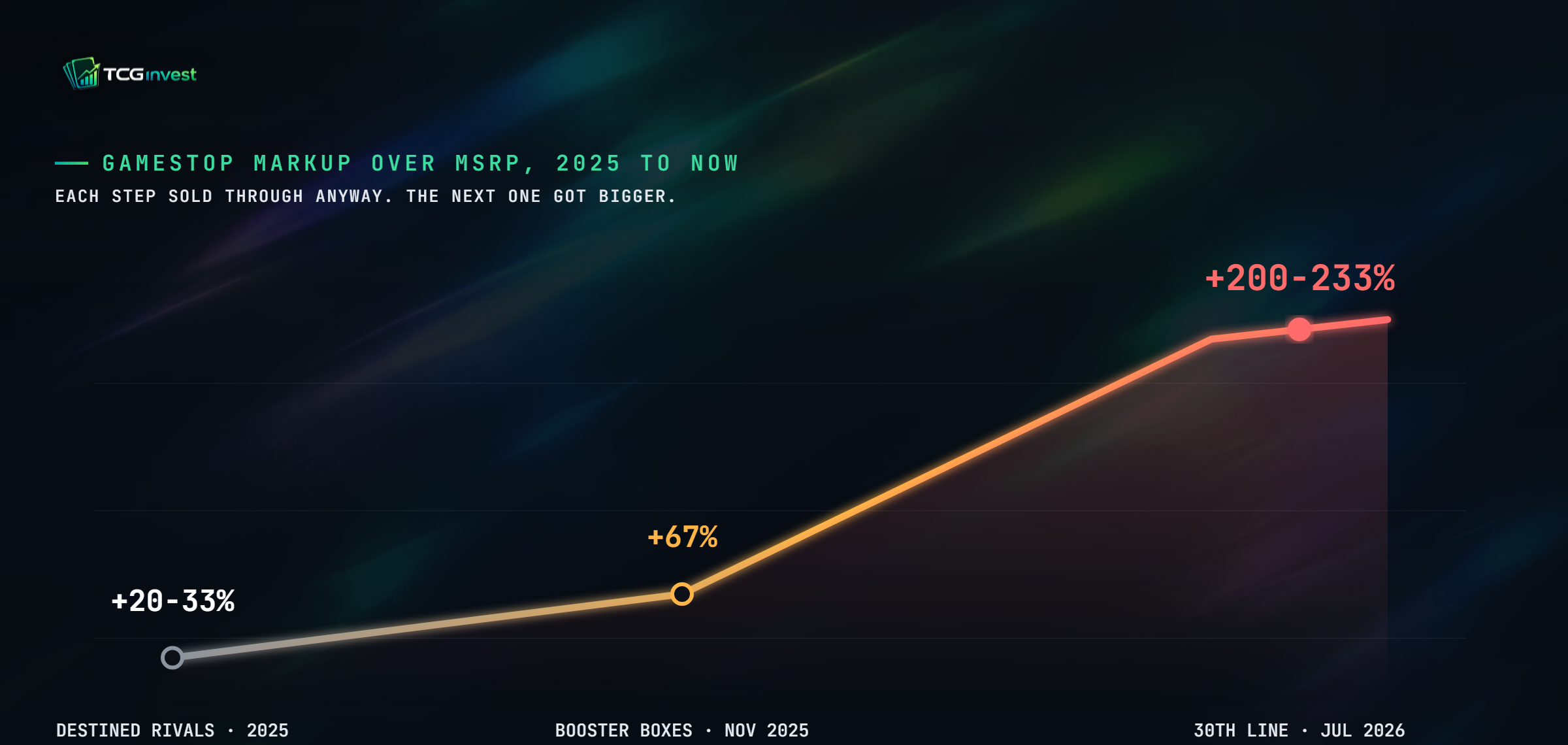
The Pokémon TCG 30th Celebration Ultra-Premium Collection releases on November 6. It has a printed price of $179.99 per the official product page. GameStop's pre-order price is $599.99. And open-market pre-order listings already sit around $1,480. Nobody has opened a single pack.
The escalation happened in three steps
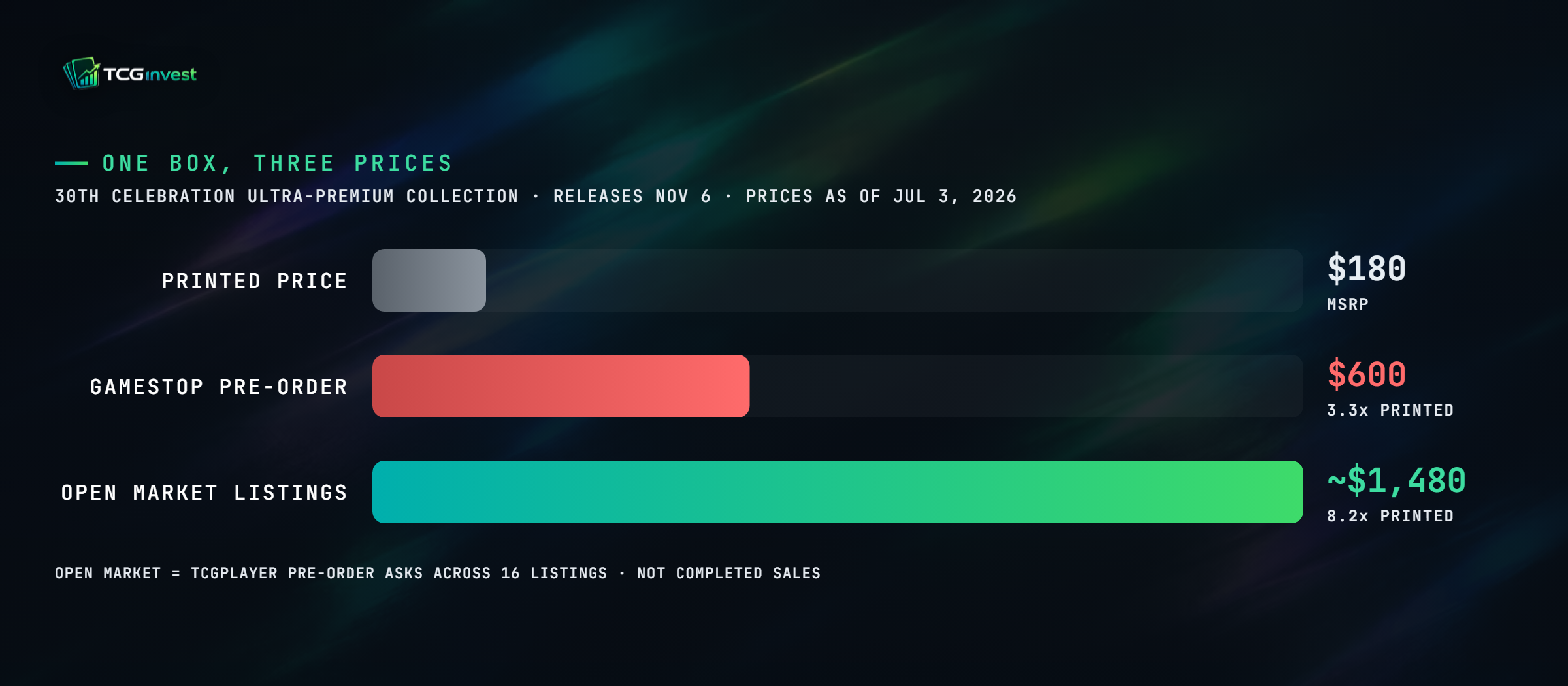
When GameStop priced the Destined Rivals set 20 to 33% above MSRP in 2025, it was reported as a curiosity: the first time a major US retailer had openly sold Pokémon product above the printed price on release. By November 2025 the curiosity was policy — Kotaku documented booster boxes with a $143.64 MSRP on GameStop shelves at $239.99, a 67% markup.
The leaked 30th Celebration sheet is the third step, and it is not subtle. Cross-checked against official MSRPs, essentially every product in the line carries roughly a 3x price:
- Elite Trainer Box: $49.99 MSRP → $149.99 (+200%)
- Ultra-Premium Collection: $179.99 MSRP → $599.99 (+233%)
- ex Box: $21.99 MSRP → $69.99 (+218%)
- Mini Tin: $9.99 MSRP → $29.99 (+200%)
Each step was a test. Each time, the product sold anyway. So the next markup got bigger.
In per-unit terms: the extra margin on a marked-up booster box in November was about $96 over MSRP. On a single 30th UPC pre-order it is roughly $420 over MSRP, collected months before the product ships, with a down-payment system attached. GameStop does not disclose its TCG unit volumes, so nobody outside the company can compute the total take honestly. But the per-unit escalation is public arithmetic.
Why they are doing it
The stated reason. GameStop's explanation, as reported by Kotaku, is that the markup "deters scalpers." Whatever you think of that framing, it concedes the premise: the shelf price is now set against the resale market, not against MSRP.
The economics. The resale spread exists whether or not GameStop takes it. With open-market pre-orders listed around $1,480, a $600 register price still leaves room for the flipper — it just moves $420 of the spread from the flipper's pocket to GameStop's. Seen from their side, refusing the markup means donating margin to people queuing in their own stores.
The precedent. Celebrations proved the demand is real and durable. As we documented in our 25th anniversary retrospective, the Celebrations UPC sold out everywhere at $119.99 and trades around $1,232 five years later, better than 10x. Buyers who watched that happen have been trained to treat "expensive at retail" as still cheap. That memory is doing a lot of work in every $600 pre-order.
The financing angle. The leaked sheet itself advertises the GameStop Pro credit card as a payment option, next to the down-payment column. A 3x price point on a hype product is also a customer-acquisition tool for their financing products.
The strategy. GameStop's legacy games business has been shrinking for years; collectibles and trading cards are the growth line they present to investors. Tripling margin on the biggest TCG release of the decade is not a store-level decision. It is the category strategy, written down on an internal sheet with SKU numbers.
What it means: MSRP is now decorative
The interesting part is not that GameStop charges more. It is that price discovery for this product finished before the product existed. Historically, a set's market price formed after release day, once packs got opened and pull rates were known. For the 30th line, three distinct price levels — printed, retail, resale — were established two months early, and the printed one stopped mattering first.
One honest caveat: the ~$1,480 figure is asking prices across 16 live listings on a product that has not shipped, not completed sales. Pre-release asks run hot, and that number can move a long way before November — it already moved 13% in the two days we watched it. The direction of the ladder, though, is not in doubt.
The lesson for anyone holding cards or sealed product is the same one Celebrations taught: the printed price tells you nothing, and the register price tells you less than it used to. The only number that matters is what the market actually pays.